
SKG Real Estate Management
Strategy
Cash flow from day one, value creation through active management and conservative financing.
Investment strategy
Four pillars: cash flow from day one, value through the platform
We invest where hands-on management makes the difference – and keep control over the timing of the exit ourselves.
Resilient cash flow
Four layers of protection:
- Hundreds of tenants across several cities
- Under-supplied mid-sized cities with high affordability
- Attractive entry yields, conservative financing
- Full control over costs and CapEx
Unorthodox asset focus
We assess the street, not the city. Every micro-location is inspected on foot, not merely modelled – proximity to universities, transport hubs, employers and public administration.
Integrated platform
Investment, Asset Management and Property Management from a single source. Our own service company instead of external property managers – for cost discipline and transparency.
Exit optionality
No pressure to sell. Individual sales to local family offices, portfolio sales to institutional investors, a platform sale or long-term holding with ongoing returns.
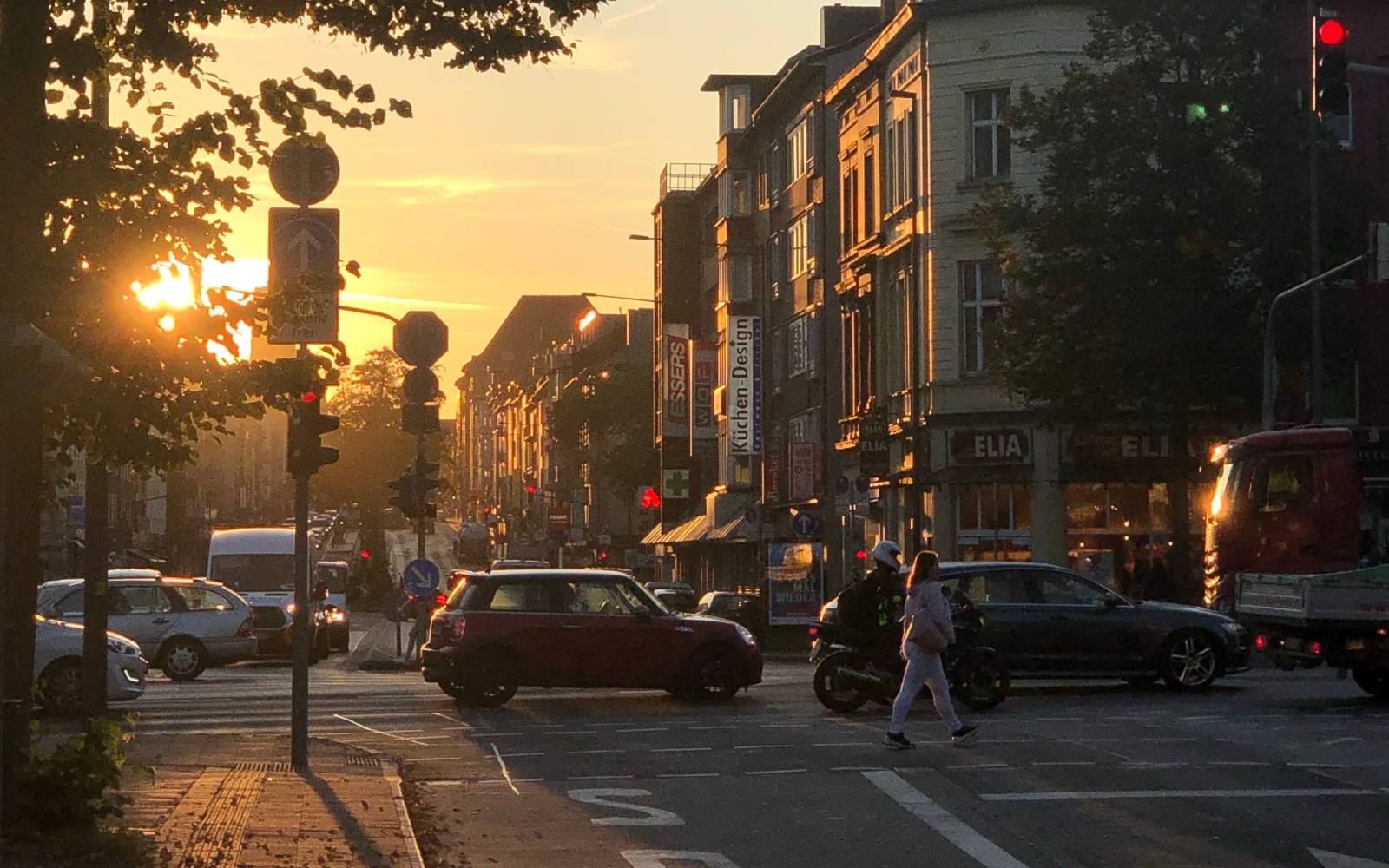
Unorthodox asset focus
We assess the street, not the city.
Our segment
The overlooked middle market
Too large for private buyers, too small for institutional investors: in the segment of €5–50m per transaction, families, communities of heirs and smaller portfolio holders are selling – often outside widely marketed processes.
Fully intermediated, widely marketed processes, low cost of capital – pricing with no room for manoeuvre.
A fragmented market with private sellers. We bring institutional discipline to a segment that has hardly any professional buyers.
Individual purchases for retirement provision – fee-intensive, not very price-sensitive, not scalable.
Sub-strategies
Three strategies, three separate companies
Each sub-strategy is held in its own property SPV – with clear acquisition criteria and its own value lever.
Basic Living
Existing apartments in established Rhine-Ruhr cities: low capital values, high running yields, steady rental growth.
- Region
- Rhine-Ruhr, cities with approx. 200,000 inhabitants or more, or their surrounding areas
- Year of construction
- 1950–1970
- Purchase price
- below €2,000 per m²
Focus: ongoing cash flow
Manage-to-Prime
Residential property close to universities, gradually repositioned as furnished apartments – flexible between conventional and student housing.
- Region
- Western Germany, cities with approx. 200,000 inhabitants or more, or their surrounding areas
- Year of construction
- from 1950
- Purchase price
- below €3,000 per m²
Focus: repositioning
Effortless Living
Fully furnished serviced apartments with lease terms of 3 to 18 months and an all-inclusive service – rents continuously adjusted to market levels.
- Region
- Western Germany, max. 15–20 minutes from the university
- Stock
- stock not subject to rent regulation
- Purchase price
- below €4,500 per m²
Focus: less regulated environment
Strategic investments
CapEx is determined with discipline and implemented rigorously
The same process, different answers: every measure must demonstrate a positive return on investment – or it is not carried out.
All CapEx options are already captured at acquisition.
Every item is challenged together with technical experts.
Does the measure exceed our hurdle for return on investment?
Invest, defer or deliberately do nothing.
Major city, southern Germany
A structurally sound building, rated only energy class F because of its oil heating and weak façade. District heating and a refurbishment of the building envelope raise it to class A; the costs can be passed on to tenants under § 559 BGB (German Civil Code).
InvestRuhr area
Solid, fully let stock with no structural requirements. The market pays no premium for modernised apartments – every euro invested would have no effect on rents.
Deliberately not investingRhine-Main region
A well-located corner building with retail space. Unused storage areas on the first floor are being converted into ten residential units – the higher residential share also strengthens the exit value.
InvestESG
Pull to ESG
We use the German subsidy market to improve energy efficiency in a targeted way wherever it pays off for tenants, the environment and investors. The regulatory framework turns energy-inefficient stock into an opportunity for active owners.
We decide for each property individually whether the effort is worthwhile: we assess costs, subsidies and the achievable rent – and invest only where the measure can be recouped through rents.
- EU requirement: residential buildings to reach at least class E by 2030 and class D by 2033
- GEG (German Buildings Energy Act): gas or oil heating systems older than 30 years must be replaced within two years of a change of ownership
- New heating systems with at least 65% renewable energy
Financing
Conservatively financed, regionally rooted
By European standards, Germany is “overbanked” – in NRW alone, more than 230 banks are active. We finance through regional relationship banks at attractive margins and with lean covenants.
| Borrower | Property SPV |
| Interest rate | 75–150 bps over swap or EURIBOR, fixed rate preferred |
| Term | 5 to 10 years fixed |
| Amortisation | 0–2%, depending on CapEx and cash flow |
| Leverage limit | max. 60% loan-to-value (LTV) |
| Target debt service coverage (DSCR) | approx. 1.25x |